

TL;DR, Episode 6 frames Awajima as haunted not by ghosts but by the harm living students do, using hallway imagery and Horiuchi’s fear to make the school’s social violence feel spectral.
Episode 6 reframes Awajima’s hauntings as debts the living owe, not visitations from the dead. It matters because the school’s corridors and one frightened girl turn routine movement into danger. This Hundred Scenes of AWAJIMA episode 6 review covers the hallway motif, the karmic frame, and how bullying replaces jump scares.
It keeps plot beats light while explaining why this hour lingers.
What Happens in Hundred Scenes of AWAJIMA Episode 6
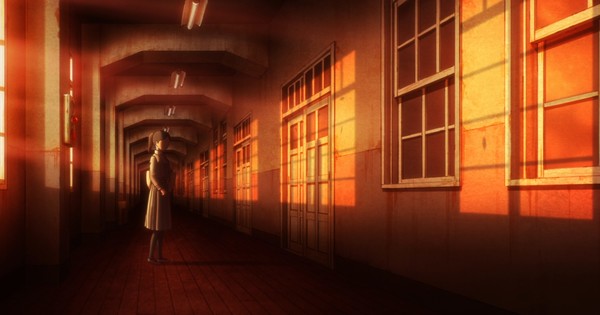
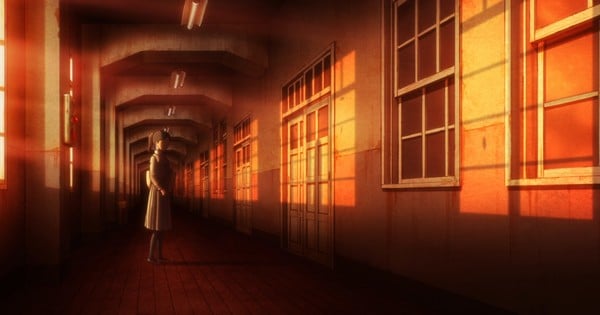
Hundred Scenes of AWAJIMA episode 6 opens on a near-empty corridor after class. A lone girl walks as two presences trail her, one flesh, one imagined. The episode returns to this hallway imagery at the end, turning passage between rooms into a quiet hunt.
The narrative jumps across timelines to Emi Okabe’s class. In the past, classmates admit their roles in nudging Emi out. Ibuki is then ostracized and accepts it as penance, Sumiyoshi contemplates suicide but does not follow through, and Oshiage confesses bystander guilt in a stairwell scene that mirrors Asami’s talk with the cult survivor the week before.
In the present, those burdens persist. Ibuki and Oshiage return as teachers, hearing whispers they ignore, and Sumiyoshi revisits Awajima as a mother while her own mother praises the school and her daughter thrives. Festival prep hums with a “test of courage,” and a Romeo and Juliet production mirrors messy bonds like Kinue and Ryouko’s unresolved push-pull.
com/daemons-episode-6-recap/”>daemons episode 6 recap. This episode 6 recap sticks to on-screen beats without overexplanation.
How Hundred Scenes of AWAJIMA Uses Hallways and Ghosts
Hallways read as a liminal commons, the hallways motif that ferries bodies while exposing private tensions. The show frames these in-between spaces as where friendships spark and cruelty hardens, all within sight of peers but outside authority. The bookend shots stress how a simple walk becomes a gauntlet of stares, footsteps, and imagined pursuers.
This isn’t a campfire ghost story so much as a karmic ledger written onto walls and routines. The shrieks from a “test of courage” play like ironic wallpaper while real dread attaches to gossip, silence, and guilt. For adjacent staging craft, our witch hat atelier recap shows how thresholds and frames guide attention, a helpful lens for this visual analysis.
- Transit becomes theater, where everyone witnesses but few intervene.
- Stairwells double as confessionals, echoing last week’s mirrored talk.
- Bookends tie private fear to shared architecture, sealing the loop.
Why Horiuchi’s Fear Makes Awajima Feel Like a ‘Cesspool’
Horiuchi says she fears the living, not the dead, then calls Awajima a cesspool. We watch classmates mistreat her in small, repeated cuts, the kind that bruise without leaving marks. To cope, she reimagines bullies as faceless apparitions, giving her permission to run, because fleeing phantoms feels safer than confronting peers.
That reframing widens into the bullying theme that shapes the school’s memory. Ibuki’s acceptance of ostracism as penance, Oshiage’s bystander regret, and Sumiyoshi’s near self-destruction show how harm lingers after the victim is gone. Teaching or parenting at Awajima does not grant absolution, it keeps the bill due.
The character impact is cumulative, not curable.
Even festival theater reflects it. Romeo and Juliet plays like a mirror for tangled longing between Kinue and Ryouko, desire colliding with class and resentment. The question of love or envy stays unresolved, which fits the cesspool image Horiuchi names.
com/witch-hat-atelier-episode-7-recap-2/”>witch hat atelier recap 2. This Hundred Scenes of AWAJIMA episode 6 review lands on one truth: real people are the scariest ghosts.
Related: daemons episode 6 recap.
Related: witch hat atelier recap 2.
Source: ANN